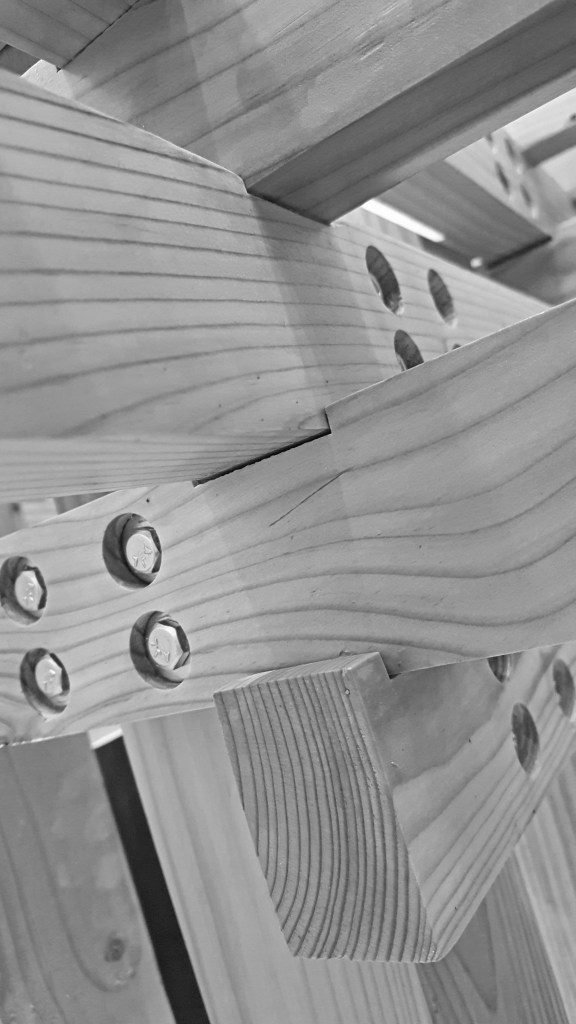
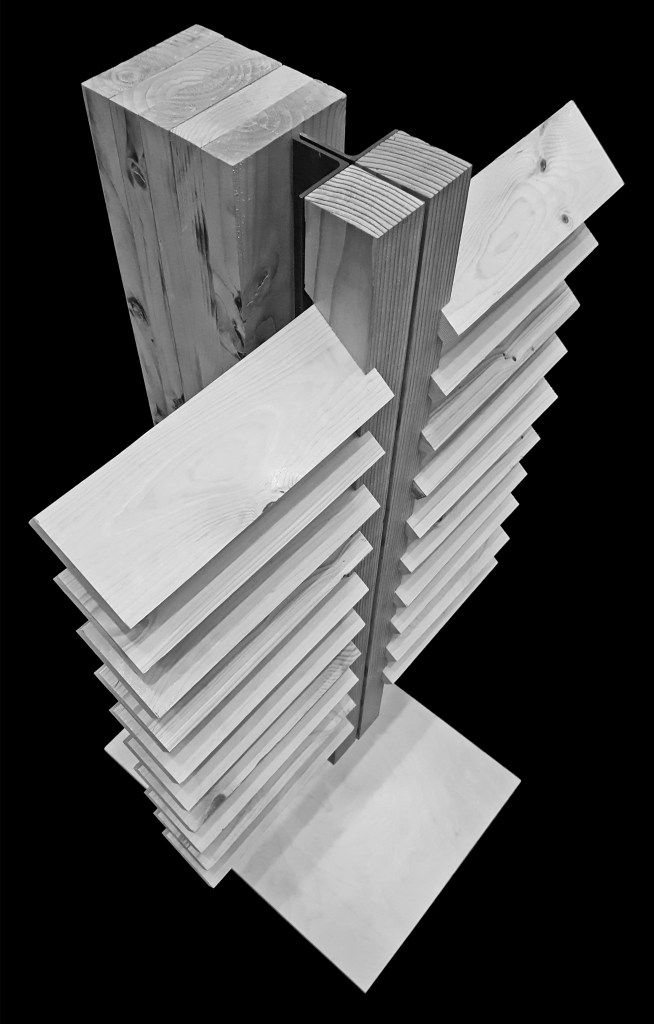
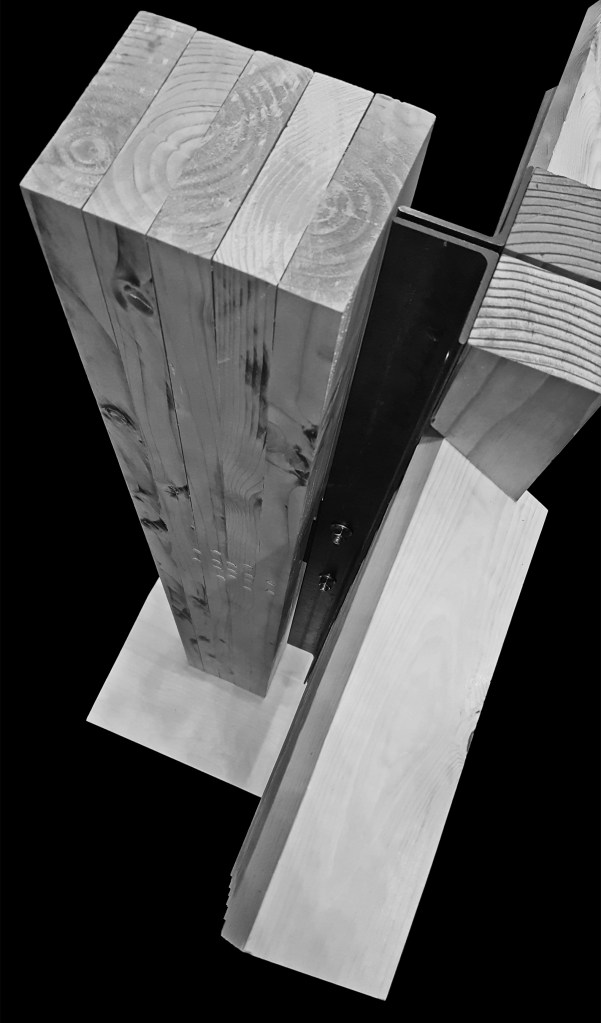
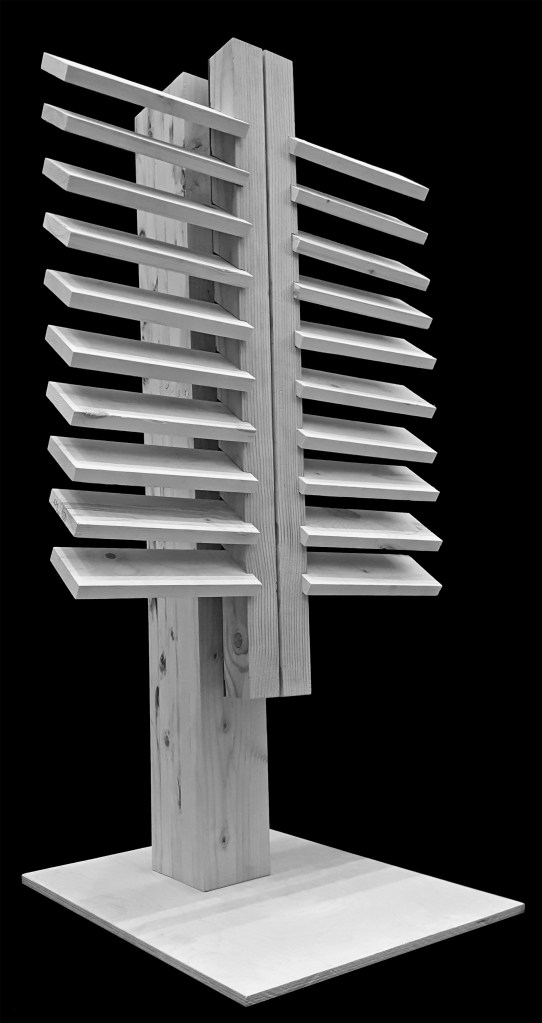
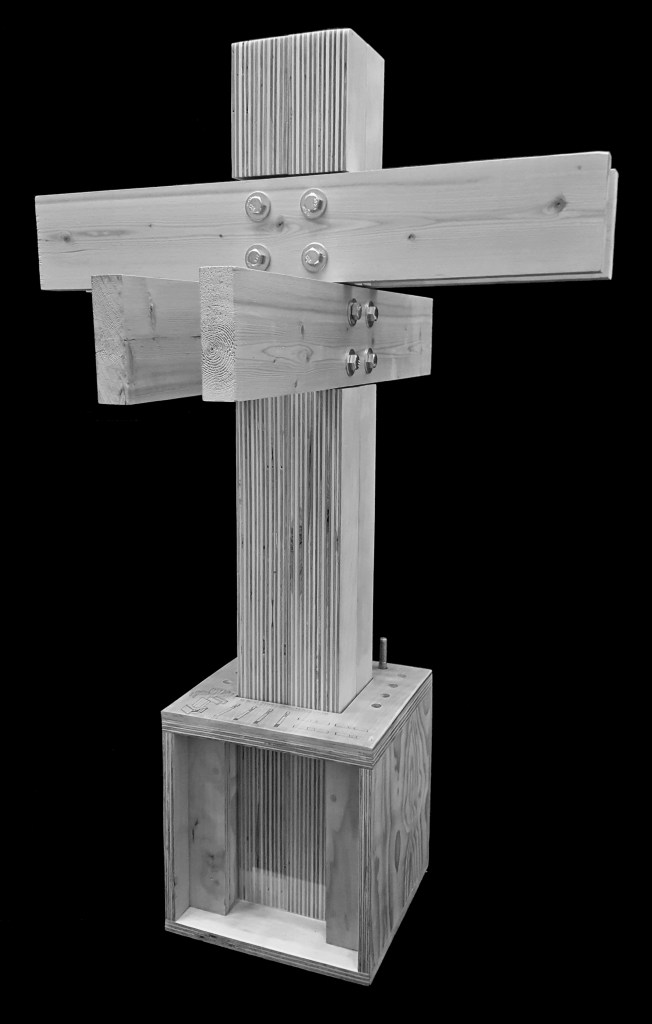
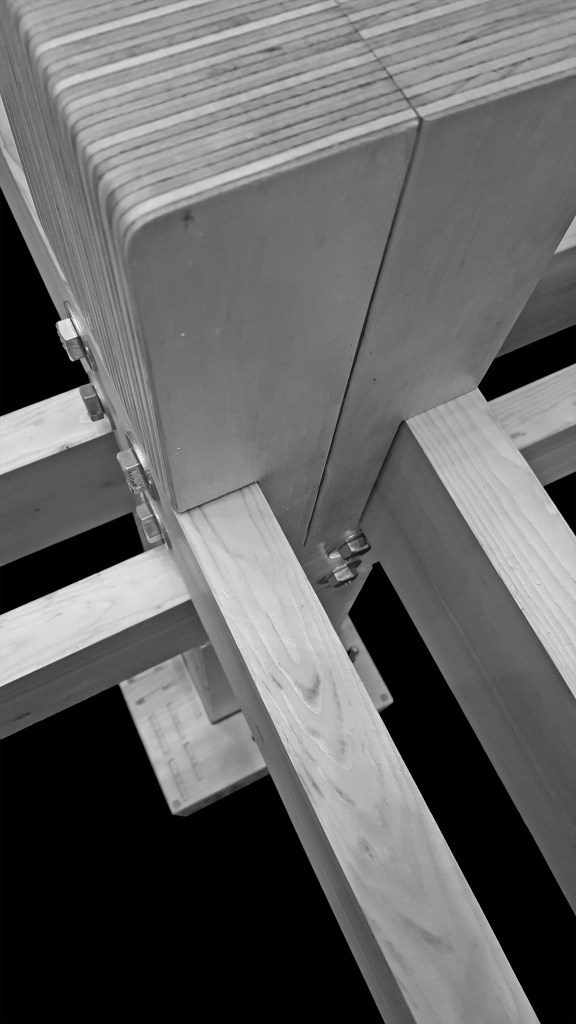
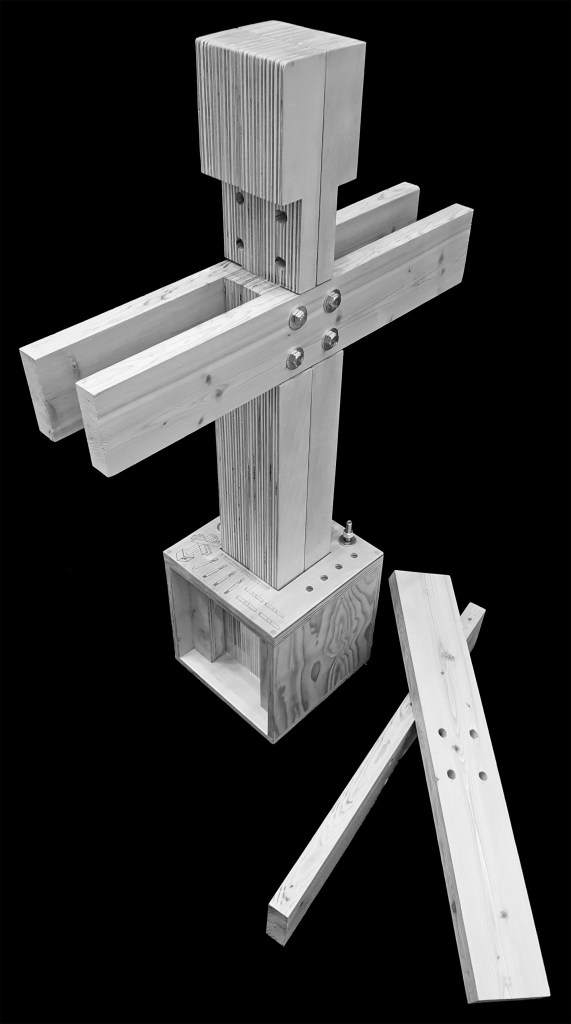
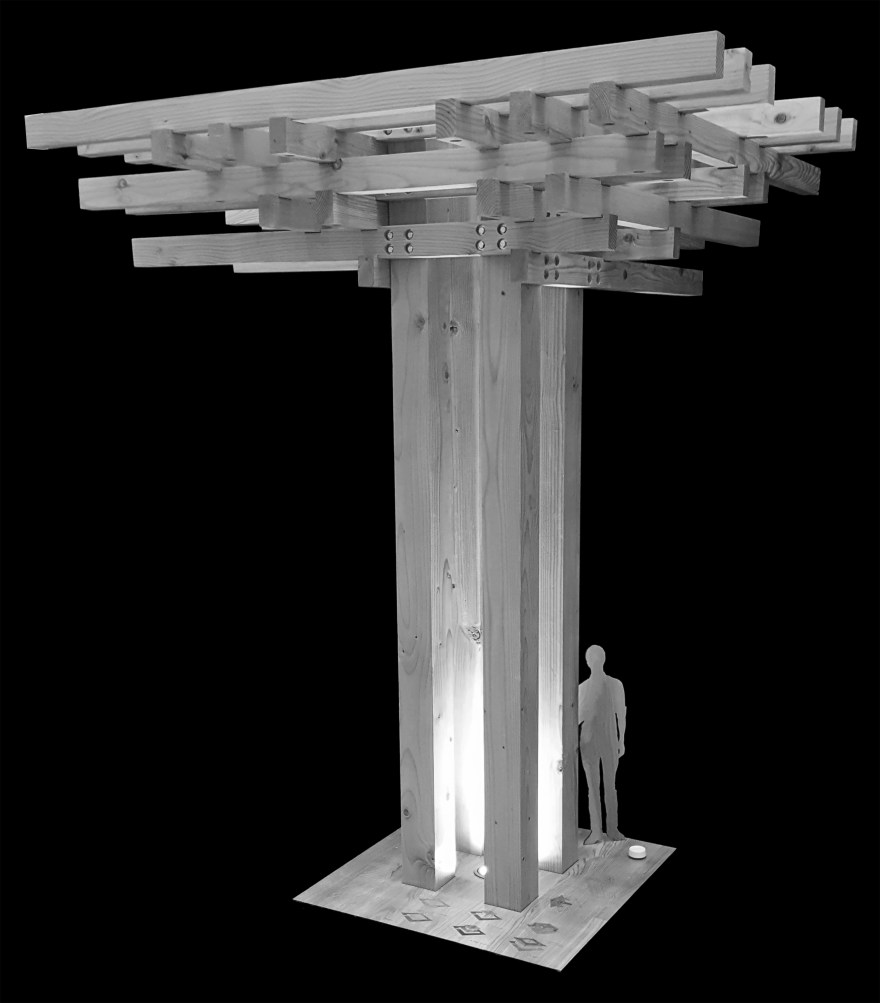
This semester, the students undertook the critical tectonic analysis of an architectural precedent, using my book Introducing Architectural Tectonics as a template. The final task of the semester was to utilize all of the research and the tectonic analysis of the precedent to develop an inspired built work. The nature of the construction was up to the student as the assignment was open-ended, but had to satisfy some base requirements. It had to be made of traditional construction materials – dimensional lumber, metal, concrete, etc – and not modeling material – basswood, chipboard, etc. The construction also had to be a minimum of 2’-0” x 2’-0” x 2’-0” (many of the students went much larger), although it did not need to take any specific shape. Although open-ended, architectural details were recommended for this task because of their relevance to most of the written work generated by the students.
Category: Student Work
-

F17 | Investigating Architectural Tectonics
Final Constructions | Eddie Garcia, Matthew Dickman, and Dipen Patel | F17 -
Book Chapter | Learning by Doing
Schwartz, Chad. “Learning by Doing: The Educational Value of Design/Build.” In The Louna Bookshop Project, edited by Christian Hermansen. China: UED and Taylor & Francis, 2020 (anticipated).
Abstract
This introductory chapter to The Louna Bookshop Project discusses the learning opportunities inherent in the pedagogy of academic design/build. Academic design/build – an educational construct somewhat distinct from the professional practice construct of the same name in which the same entity provides both design and construction services – affords students the opportunity to actualize their design work through its construction. In some cases, [academic] design/build involves small structures, objects, or systems built in and around the school; in others, the students spend weeks or even semesters living and building in places very remote from and very culturally different from their university classroom. As such, academic design/build exists at a variety of scales, scopes, and budgets. Most design/build projects undertaken in architecture schools are hosted in design studios, where the large number of contact hours, more flexible learning objectives, and number of student participants are best suited for accommodating the rigors of this type of work. This rule is not absolute, however, as design/build can be utilized as an educational tool in virtually any course with any number of students – working individually, in small groups, or as a single entity depending on the scope of the project.
The aim of the book is to provide an account of the The Louna Bookshop project, which is part of a much larger initiative in China to push for development of rural areas through the National Strategic Plan for Rural Vitalization. Since 2011 many projects have been initiated which explore different ways of addressing the future of rural China. The diversity of these projects suggests that they are experiments by which to decide what the future of rural China should be like. The Louna Bookshop project is a collaborative endeavor between Urban Environmental Design (UED), the China Building Centre (CBC) and The University of Oslo’s (AHO’s) Scarcity and Creativity Studio. The book’s editor/author is Christian Hermansen, a Professor in the Department of Architecture at the University of Oslo, who is leading the academic design/build of the bookshop. The hope is that this text will reveal the story of this undertaking and serve as a guide to teachers and students who may wish to participate in similar activities in the future.
Connectivity
This publication is due, in part, to my history of writing about and critiquing the practice of academic design/build, found in numerous other published works of mine. The material here is drawn from many of those sources.
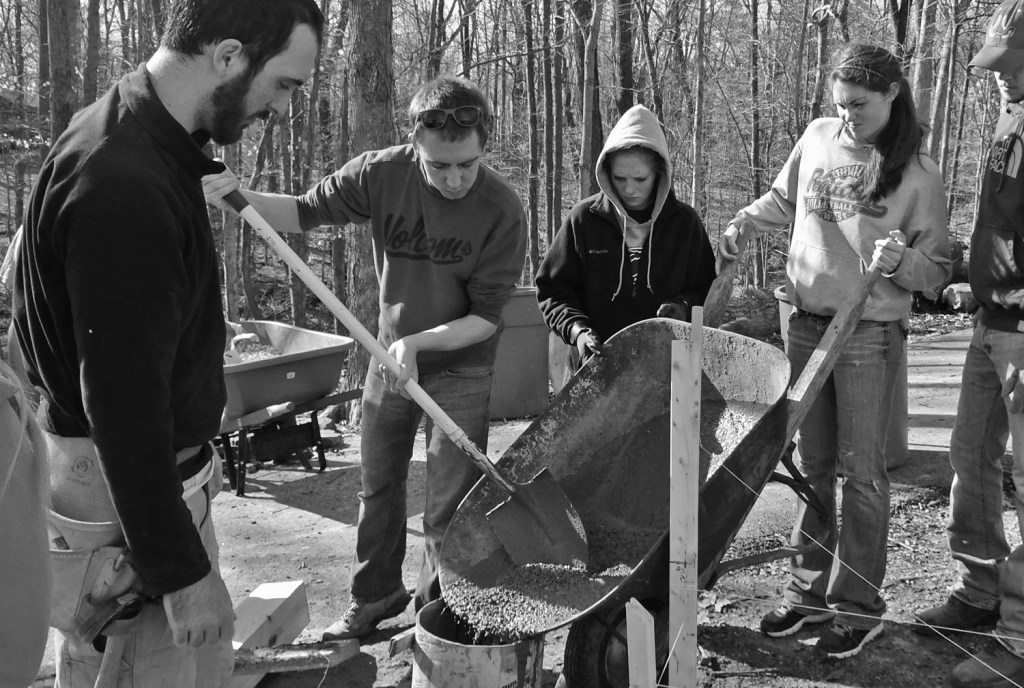
Photograph by Shannon McDonald, Southern Illinois University.
-

Paper | Defeat in Victory
Schwartz, Chad. “Defeat in Victory: Reflecting on the Value of Design/Build.” Paper presented at the 2018 Design/Build Exchange Conference: Working Out: Thinking while Building III, September 2018.
Abstract
Several years ago, I decided that participating in community-based design/build is an experience that every student passing through the school of architecture should have at least once in his or her education. As an individual faculty member, however, the design/build studio was incapable of providing this type of reach. As such, a design/build project was initiated in an introductory building science course operating in the second year of both the architecture and interior design programs. The project, the design and construction of an outdoor meeting space at a local nature center, was ultimately a success. It was completed within budget, well-received by the client and others, and the facility is used extensively.
The quality of the learning experience of the majority of the student participants, however, ultimately classifies this project as a failure. Some of this diagnosis resulted from the excessive amount of time required to complete the project, resulting in dozens of extra work days during which just a small number of the students participated in the construction of significant portions of the structure. Another contributing factor was the lack of infrastructure in place to handle this type of project pedagogically. The most significant reason for the failure of the project, however, rests on the division of labor. Unlike a design studio, technology sequence courses often have more focused learning objectives, which every student in the course must meet equally. The significant division of labor required to allow over fifty students to simultaneously work on a single project resulted in most students only engaging with a small portion of the design and construction process. As such, few students had a true design/build experience and exited the class at the end of the semester meeting the project and course learning objectives.
Connectivity
This paper is the last in a series of four written works that studied the progress of a design/build program over a five year timespan while teaching building technology at Southern Illinois University. Other works in this sequence are Constructing Experience, Debating the Merits of Design/Build, and Examining Strategies for Delivering Design/Build Content in High-Enrollment Architecture Courses.
-

s14 | arc 242 | final design|build project
Below you will find a few images of the completed design|build project from ARC242 in the spring semester of 2014.


-

s14 | arc 242 | build-in-progress
This semester in ARC242, the students were challenged with a traditional design|build project. Over the course of three required build days and about 15 voluntary build days, the class built a new amphitheater space for SIU’s Touch of Nature. Below are a series of images of the build process.


-
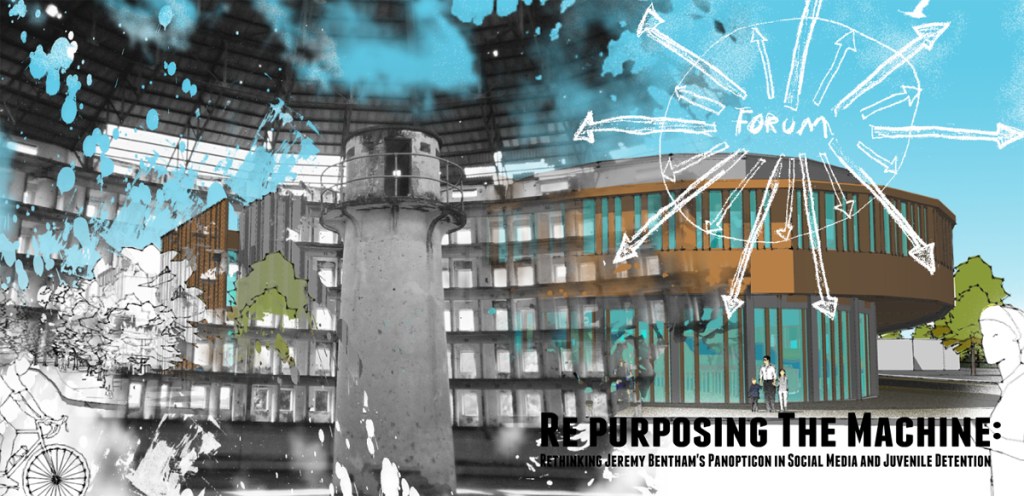
su13 | arc550 | semester booklets
At the conclusion of ARC550, each student was asked to create a small booklet that outlined their progress through the semester. Below, you will find a few select examples of these booklets.
-

su13 | arc550 | final boards
Below, you will find a selection of the boards presented by the students in ARC550 in defense of their semester’s work.


-

su13 | arc550 | research anthologies
This summer in ARC550, the students were divided into four groups. Each group, over the course of three weeks, explored a variety of topics centered on juvenile justice. Some of these were done individually (for example the initial writing assignments). Many, though, were done as a coordinated effort within the group. After analyzing juvenile justice topics, the site, and the program, each group was asked to create an anthology of their work for use by the class during the design of the juvenile facility. Below you will find two examples of these anthologies.
-

f12 | arc351 | final boards
Below you can find a few samples of the final boards produced by the students in ARC351. These boards outline their designs for the final project of the semester: a cemetery. The students also produced a 1:10 model for the review and incorporated in one of their panels from earlier in the semester.


-

f12 | arc351 | final presentation
Below, you will find images of the ARC351 final presentations for the fall semester of 2012.


-
f12 | arc351 | midterm presentation
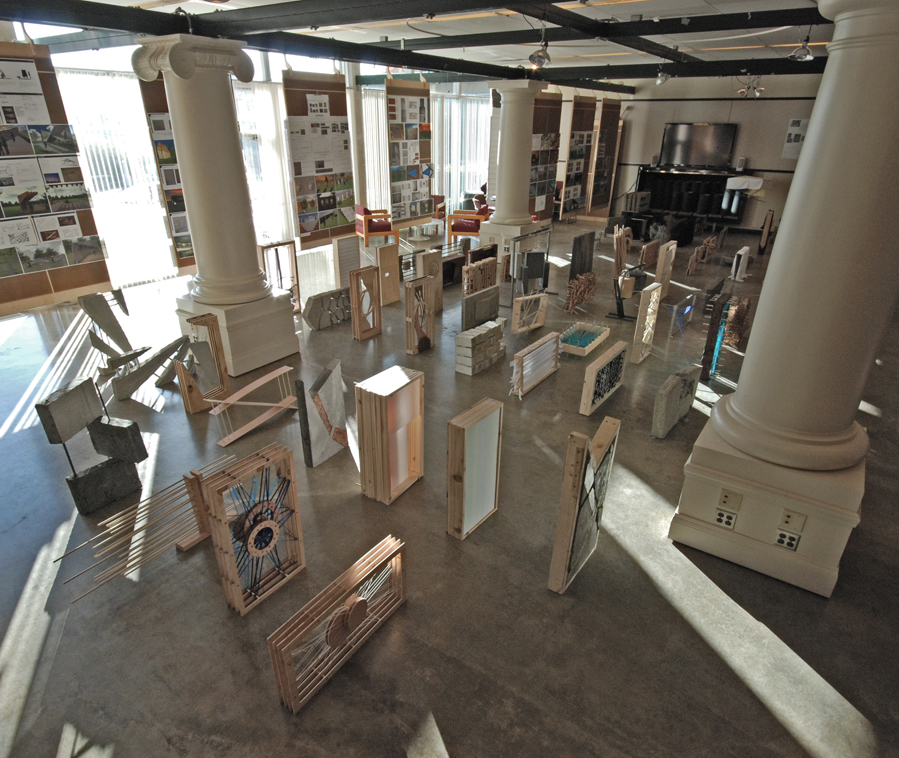
At the midterm of the semester, the students in this section of ARC351 presented their first major assignment of the semester. In this problem, the students were asked to transform the inspiration of an object or experience found within the context of our site into a series of three 16”x32” panels each created using a different primary medium. The first set of panels was made using wood; the second set using fabric; and the third set using concrete. Each medium offered the students a different opportunity for exploration and a different focus for channeling their inspiration. In addition to the panels, the students produced a series of 11×17 sheets which contain their sketches, ideas, diagrams, and techniques for creating their miniature pieces of full scale architecture. They were also asked to photograph the panels and generate a series of quick renderings that show the panels occupied at different scales: the site, the building, the space, and the person. At the conclusion of this work, the panels will be transformed once again as the ideas will be pulled out and used to form the basis for the final project of the semester: a cemetery.


-

su12 | arc550 | research
Below you will find examples of the research work done during the summer graduate studio. Research was done in groups in three areas: case studies of local orchards, programmatic research into the five given program areas, and site and context research for the location of our site in Southern Illinois. The front image for this post comes from the program analysis presentation of group 2.
group 3 case study – Lipe Orchards
group 4 case study – Rendleman Orchards
group 3 context analysis – envrionmental
group 4 context analysis – geographical
-
su12 | arc550 | project books
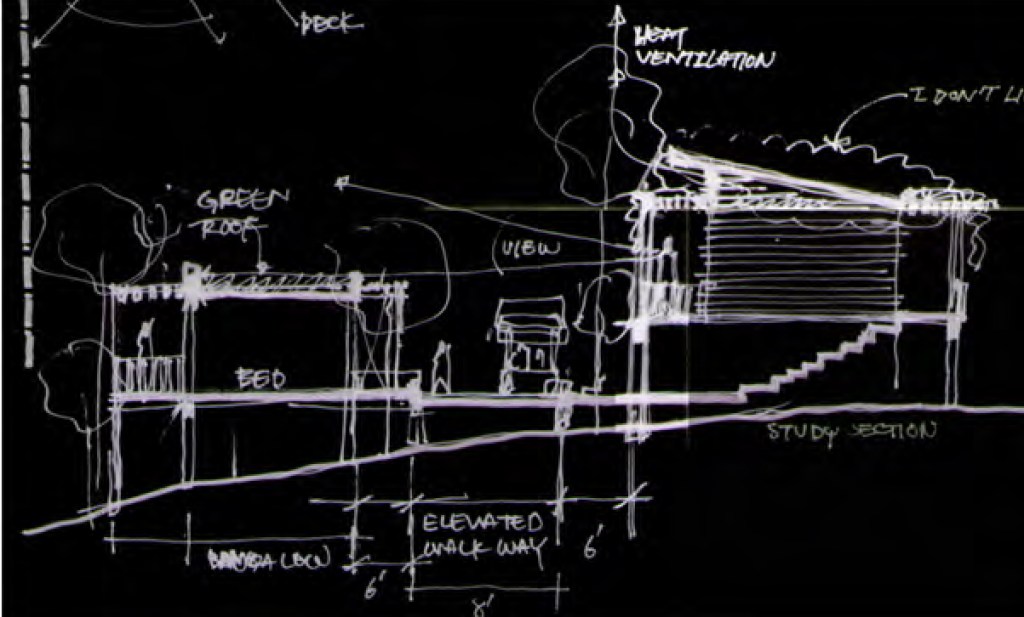
At the end of the semester in ARC 550, the students were asked to submit a booklet (published through Blurb) that summarized their studio project for the semester. Many of these books were too large to upload to the site, but below you will find excerpts from some of them that outline not just the physical built piece, but also the research and thinking behind what they produced. The front image for this post comes from the book of Otto Chanyakorn.
-

su12 | arc550 | final boards
These are a selection of the final boards produced by the students in the summer graduate studio.


-
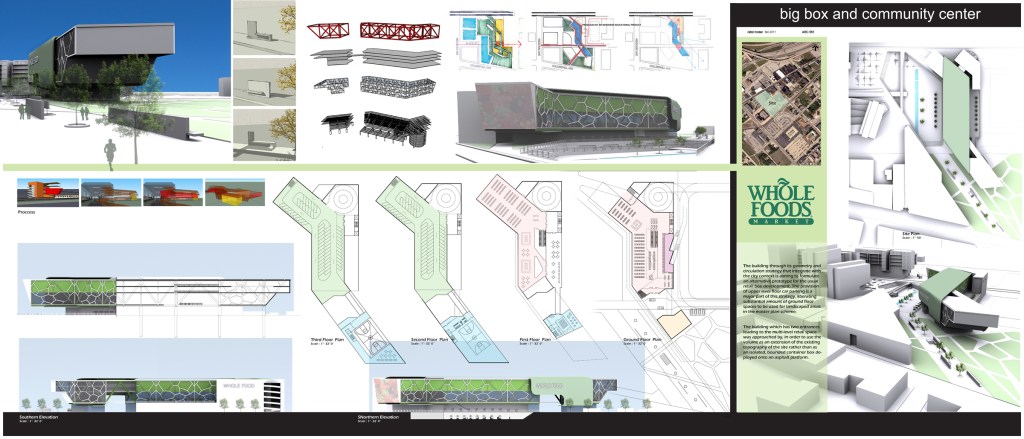
f11 | arc551 | final boards
Here is a small sample of the final boards produced by the arc551 students last semester.


-

end of the semester final reviews
Here are some images from the final reviews in the school of architecture this semester.



 Chad Schwartz Research Anthology