
For the past decade, my primary research agenda has focused on architectural tectonics. Architectural tectonics involves exploring the relationship between the design of the spaces we inhabit and the reality of the construction necessary for those spaces to exist. In the opening lines of his essay “The Tell-the-Tale Detail,” the late architect and educator Marco Frascari wrote: “Elusive in a traditional dimensional definition, the architectural detail can be defined as the union of construction, the result of the logos of techne, with construing, the result of the techne of logos.”1 In this statement, Frascari pairs theory with practice and thinking with making. His essay, along with other critical writings, served as a catalyst for my fascination with the making of things and with the theoretical premise of the archi-tectonic outlined above, which guides my work as an educator, an academic, and an architect. Frascari asserted that the joining of elements in a building is not just an act of construction, but one that contributes to defining the qualities of the space created through construction. In essence, if you change the materials, the details, and the construction of a place, you will also significantly alter how that place is experienced.
I have written articles and presented my research along this line of inquiry in a number of venues, but, more critically, my work on this subject initially coalesced in the generation of my first book, Introducing Architectural Tectonics: Exploring the Intersection of Design and Construction, which was published through Routledge at the end of 2016. My intent with this publication was to make the principles of tectonics more accessible to students of architecture through the development of a broad conceptual foundation of tectonics followed by my tectonic analysis of twenty contemporary pieces of architecture. My second book, Situate, Manipulate, Fabricate: An Anthology of the Influences on Architectural Design and Production (Routledge, 2020), is a collection of eighteen essays that present the tectonic impacts of three critical topics identified in the first book: place, material, and assembly. I paired the essays in chapters as comparative perspectives on nine specific points, writing introductions to each chapter myself.
While my research to-date has built on the premise of a multifaceted understanding of construction in the practice of architecture, the intent of the work, though, has always been to develop ways to best teach the principles of architecture to future generations of practitioners. As such, my research is closely linked to my teaching and my books are written with students in mind, keeping the concept of clarity at the forefront of my writing. My concept for Introducing Architectural Tectonics was to take the 170-year history of architectural tectonics and create a taxonomy of critical concepts that would be easier for students to understand and digest. These concepts were then used to analyze the highlighted architectural works, clearly demonstrating – through text, images, and graphic diagrams – how a tectonic approach to architecture could influence designed work. I also strive to write for all students of architecture (whether inside or outside the University). While architectural theory can be challenging in its language and its complexity, my writing is not. I do my best to explain concepts in a way that is accessible to novice students while still containing the rigorous scholarly content necessary to provoke those with more experience. In Situate, Manipulate, Fabricate, I used extensive annotations in the margins of the included essays to contextualize names, places, and terms for the reader that the original authors of the essays had deemed commonplace for their audiences. If a student wants to learn from my publications, I will not allow a lack of experience or exposure to be a roadblock for them.
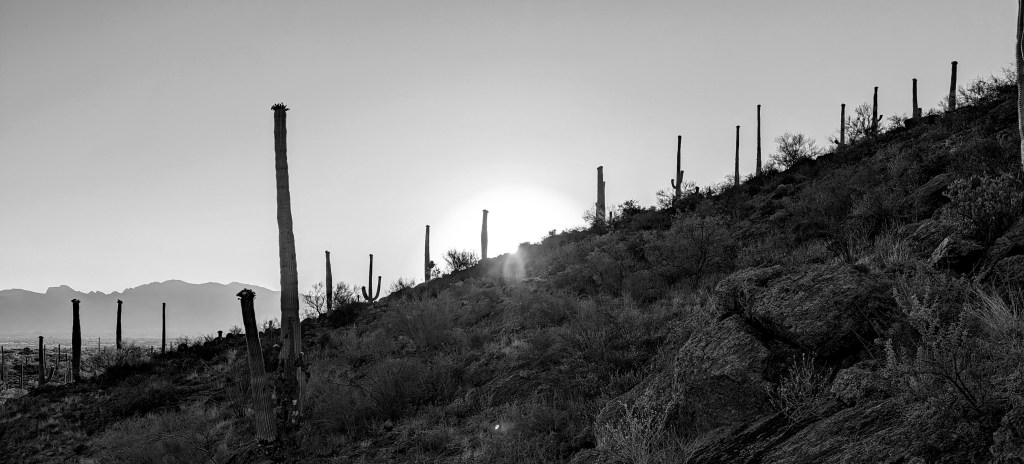
My current work continues to focus this line of inquiry, positioning place as the foundational tectonic catalyst. Instead of broadly surveying this concept, however, the intent is to deeply engage with the architecture of a single, unique environment: the Sonoran Desert which I called home for over a decade during my formative years as an architect. The intent is to better understand how the architecture of this region has been, and continues to be, influenced by the tectonics of place: responsive to a harsh and relentless (yet beautiful) environment, thoughtful in the use of local labor and techniques, creatively exploiting materials and architectural detailing, and informed by a varied and unique cultural history. Using interviews with the architecture community of Arizona and the critical first-hand analysis of their built work, the project will reveal the inherent principles, vocabulary, and influences of this architecture and tie its contemporary makeup to a lineage of building in the Sonoran Desert. I am currently working on a book entitled Constructing Arizona, which will be the culmination of this research process.
 Chad Schwartz Research Anthology